Planning a tropical getaway during hurricane season can mean fewer crowds and attractive travel deals, but it also comes with weather-related risks. A Caribbean vacation during hurricane season can still be enjoyable if you choose your destination carefully, understand the forecast, and prepare for possible travel disruptions.
It’s all in the knowledge of when hurricane season is and which islands are generally less likely to be hit by hurricanes and what you can do to insure your travel investment before you book.
When Is Hurricane Season in the Caribbean?
Hurricane season for the Atlantic Basin officially begins June 1 and ends Nov. 30. August to October is time of year when storms are most likely to occur, although storms can form at any time of the year. NOAA’s seasonal outlook can help give background information, but it is not a prediction as to which islands will be impacted.
Vacations need not be disrupted when travelling during this time. A tropical storm can bring heavy rain, strong winds, rough seas, flight delays, and itinerary changes that may affect a cruise vacation.
Which Caribbean Islands Have Lower Hurricane Risk?
Due to their location, some of the southern Caribbean destinations are not affected as often from direct hurricane attack. But there are no islands that are immune to hurricanes and even remote storms can impact the weather and seas.
Aruba, Curaçao, and Bonaire
The ABC islands (Aruba, Curaçao and Bonaire) are situated close to the coast of Venezuela, on the outer edge of the hurricane belt. They are located at a lower risk of direct impacts from hurricanes than many islands located farther north.
Aruba outside the hurricane belt is a popular search for travelers who want warm weather with a lower likelihood of direct hurricane strikes. Curaçao is also in the same situation and diving and snorkeling are popular in Bonaire.
Strong winds, rain, rough seas still can occur in these islands, as also can have indirect effects from nearby tropical systems. Do not rely on forecast weather data; it’s possible conditions will be less ideal than usual.
Is Barbados in the Hurricane Belt?
Barbados is sometimes said to be on the edge of the hurricane belt but the U.S. State Department says it is in the Atlantic hurricane belt. The island does not receive as many direct hits as other places, but tropical storms and hurricanes do impact the island, especially from June to November.
So before booking a trip to Barbados, check the forecast and travel policies as well as its geographical location.
What Caribbean Islands Are Not in the Hurricane Belt?
For travelers seeking to minimize direct hurricane exposure, Aruba, Curaçao and Bonaire are the options. Trinidad and Tobago are not considered high-risk areas for direct impacts by hurricanes in the Atlantic compared to many of the northern atoll islands of the Caribbean.
However, the term “outside the hurricane belt” does not mean “safe”, it refers to a reduced risk level. Storms may shift in direction and weather disturbances may be felt beyond the affected areas.
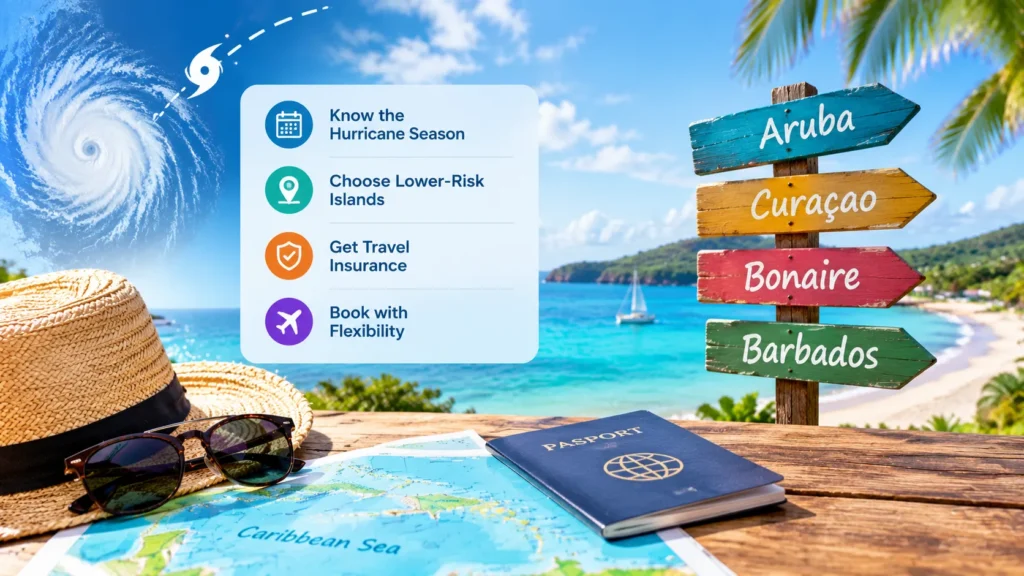
5 Caribbean Hurricane Season Travel Tips
1. Choose Your Destination Carefully
Research and compare locations for their hurricane history, seasonal weather and travel options. If direct hurricane hazard reduction is a priority, then islands further South, such as the ABC islands, may be considered.
2. Book Flexible Flights and Accommodation
Find out what the cancellation policies are before paying. If a storm is going to impact your travel, flexible hotel packages and changing flights could provide you with better choices. A luxury travel agency can help you compare flexible booking options and understand the arrangements available for your trip. Be careful to read the terms as flexibility can incur extra costs!
3. Buy Travel Insurance Early
Travel insurance for hurricane season can be used to cover prepaid costs in case of an event covered by the policy, rendering your trip cancelled. But the cover will not be the same in every policy and there may be some exclusions.
Get insurance early and check if it includes trip cancellation, trip interruption, travel delays and extra accommodation expenses. A number of plans offer coverage for losses from a named storm or one that is deemed to be foreseeable at the time of policy issuance.
4. Monitor Official Weather Updates
Before you leave and while you are on site, verify with NHC and local meteorological services. If a storm is coming, listen to the instructions from the airline, cruise line, hotel, and/or the government.
Don’t go against local or previous forecasts, or follow social media suggestions.
5. Prepare for Possible Changes
Store copies of critical travel documents, important contact numbers and essential medicines in your hand luggage. When bad weather occurs, adhere to local authorities’ advice and do not go to beaches or coastal areas if bad weather strikes.
Is a Caribbean Vacation During Hurricane Season Worth It?
If you can be flexible with your itinerary and take into account the hazards of the season, as well as the likelihood of changes in your plans, a trip to the Caribbean in hurricane season might be for you. There are measures that can be taken to minimize the risk of a direct impact from a hurricane, such as making a flight to a lower risk destination and carrying the right insurance.
When your plans are definite, or if you can’t afford to risk disruptions, a trip outside of the official hurricane season might be a better idea. This will depend on where you are going, how many days you have and how much money you’re willing to spend, as well as how you feel about risk.
Conclusion
A Caribbean vacation during hurricane season can be a rewarding trip with the right preparation. Knowing the seasonal weather, taking into account less-risky locations like Aruba and Curaçao, being flexible with your travel plans and getting the right insurance are all important things to know. Look at the latest forecasts and policies prior to booking, so you can have realistic expectations for your getaway.
Frequently Asked Questions
Is it safe to visit the Caribbean during hurricane season?
It can be, but safety depends on the destination and current weather conditions. Research the island, monitor official forecasts, and follow local emergency guidance.
When is hurricane season in the Caribbean?
The official Atlantic hurricane season runs from June 1 to November 30, with activity often peaking from August through October.
Which Caribbean islands are least affected by hurricanes?
Aruba, Curaçao, and Bonaire generally have lower direct hurricane risk than many islands farther north. However, no destination is entirely free from tropical weather disruptions.
Is Aruba safe to visit during hurricane season?
Aruba is outside the main hurricane belt, making direct hurricane impacts less common. Storms passing nearby can still affect rainfall, winds, and sea conditions.
Does travel insurance cover hurricanes?
Some policies cover eligible cancellation, interruption, or delay expenses caused by hurricanes. Coverage depends on the plan, timing of purchase, and policy exclusions.
