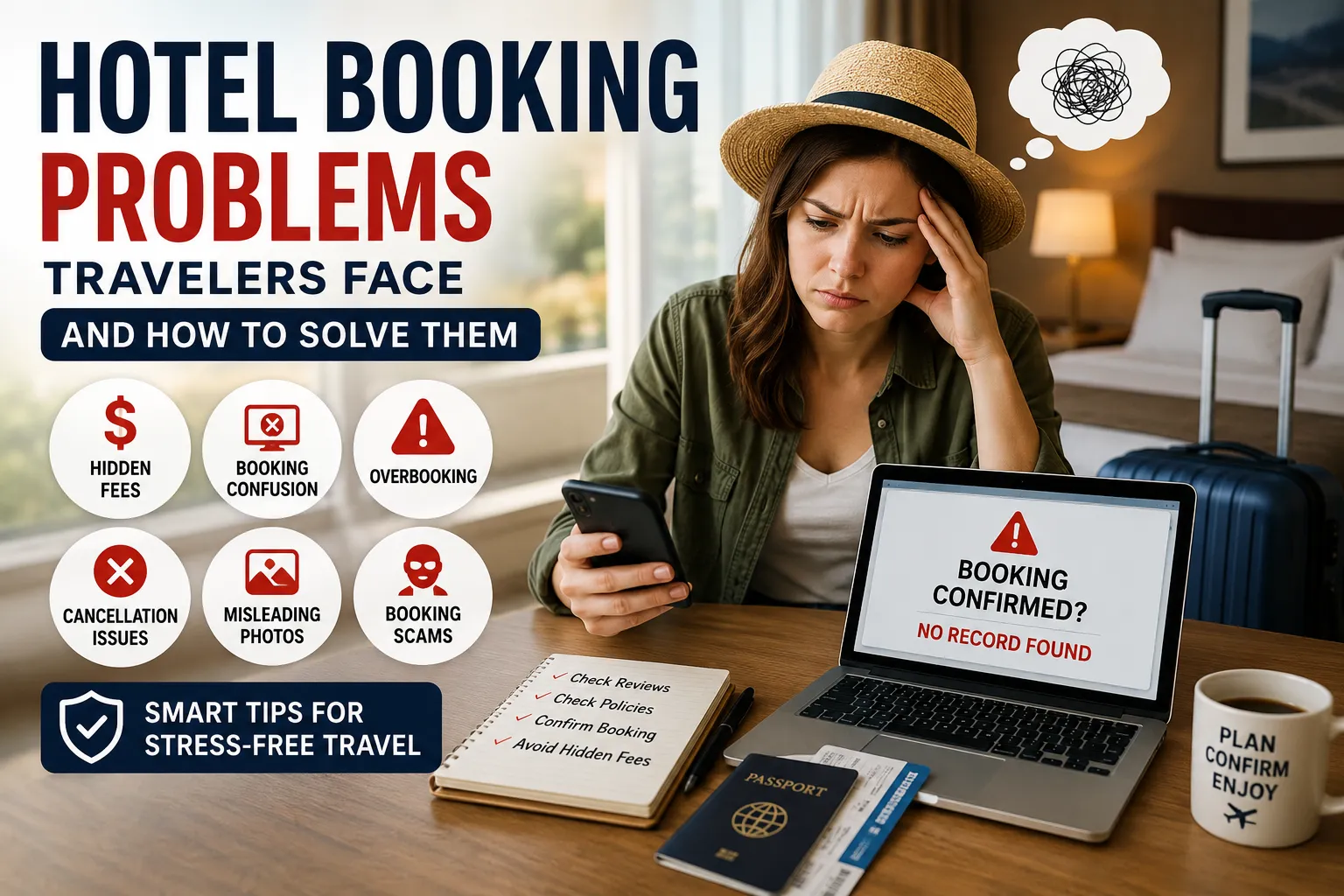
Booking a hotel should be simple. Pick a place, pay, show up. But it rarely works that way. Hidden hotel fees appear. Confirmations get lost. Rooms get double-booked. It is frustrating.
The first thing to understand is that hotel booking problems are not random bad luck. They follow patterns. Once those patterns are understood, everything starts making sense and the stress goes down immediately.
Let us walk through the most common hotel booking problems and how to fix them.
The Hidden Fee Trap
You see a great rate. $150 per night. Perfect. Then you check out and the bill is $200. What happened?
Hotels use “drip pricing.” They show a low rate upfront, then add fees step by step during booking . Resort fees, destination fees, amenity fees, service charges. They add up fast.
One study found that 68% of travelers encountered at least one hidden fee during booking. The average unexpected cost increase was 12% over the advertised price .
Hotel Booking Tips always look for the total price before entering payment details. Call the hotel and ask for the all-in rate per night. In the UK, hotels must include all mandatory charges in the headline rate . California now requires all-in pricing too. But many places still hide fees.
Third-Party Site Nightmares
Third-party booking sites are convenient. But they come with risks. The biggest Hotel Booking Problems? You might not be booking with the hotel at all.
Some companies create lookalike websites that appear above the hotel’s real site in search results. One traveler booked an $11,000 stay through a site that looked official. The hotel had no record of her Hotel Reservation Confirmation.
Guest Reservations is one of the most complained-about companies. The Better Business Bureau has received over 1,000 complaints in three years. Issues include hidden fees, overcharging, and non-refundable bookings .
Another issue: third-party bookings often get the worst rooms. Hotels prefer direct bookings because they avoid paying up to 25% in commission. As a result, better rooms may already be taken by direct bookers .
Book directly through the hotel’s website. Look closely at the URL. Use a search engine and distinguish between “sponsored” results and organic ones. Or ask an AI chatbot for the direct link to the hotel, adding “avoid third-party sites” to the prompt .
Hotel Overbooking
Hotels sometimes sell more rooms than they have. It is a deliberate strategy. They bet on Hotel Cancellations Policy and no-shows . When this happens, guests get “walked” to another property. Late arrivals and one-night stays are at higher risk .
Overbooking often happens because of system errors. Incorrect room mapping, channel manager errors, or simultaneous bookings can cause double sales . When reservations are managed across multiple channels manually, errors become inevitable .
Check in early when possible. If arriving late, message the hotel and ask them to note a late arrival on your reservation . If you get walked, push for written details covering the alternate room and transport before you leave the desk .
Confirmation and Cancellation Confusion
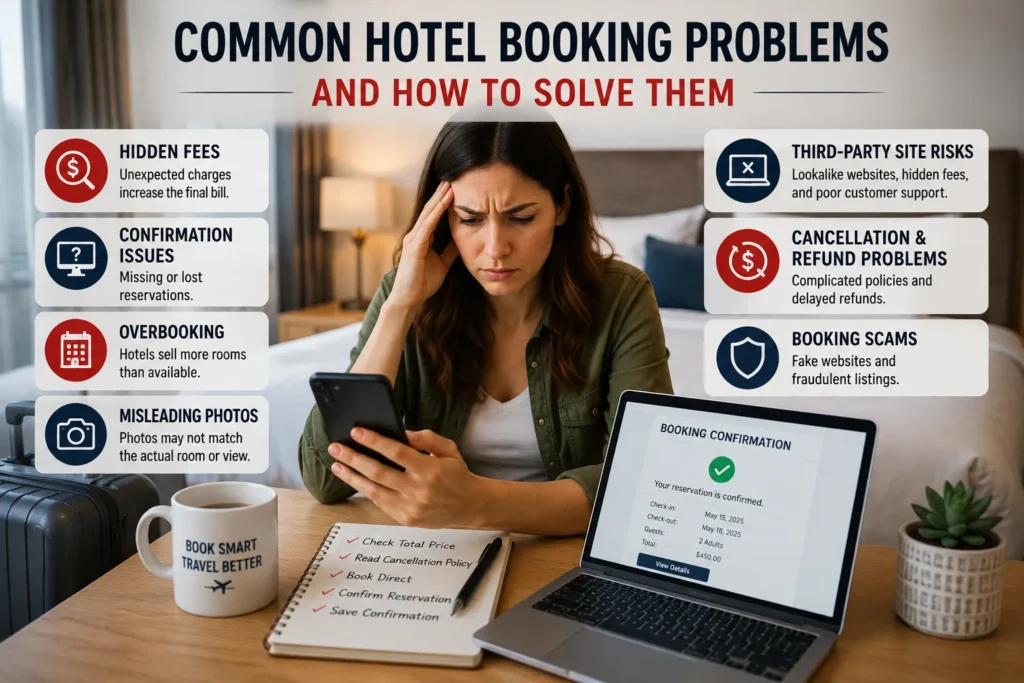
You book a room. You think you are confirmed. But the hotel has no record. Or you cancel, but the refund never comes.
Hotel booking confirmation issues are common. Sometimes the confirmation email goes to spam. Sometimes the booking never went through due to a freeze-up when pressing “book” .
Cancellation policies are another minefield. Each room has its own policy set by the hotel . “No cancellation” means no refund. Even when refunds are offered, they depend on cut-off dates .
Hotel refund policy problems are frustrating. Third-party sites often make cancellations difficult. One traveler was overcharged and tried to cancel, but was told her reservation was nonrefundable. Even when the hotel waived its policy, the third-party site refused .
Always check cancellation policies before booking. If a room says “no cancellation,” understand what that means . After booking, call the hotel directly to confirm they have your reservation. Keep your confirmation email. Check spam folders. The same booking precautions apply when planning a Cruise Vacation, where cancellation rules and reservation confirmations are equally important.
Misleading Photos and Descriptions
Online booking portals always showcase the most attractive photos and this is a hotel Booking Problems. But not every room looks like that. A street-facing room may offer a very different view. Standard rooms often fall short of the glamorous staged photos .
Location is another issue. A hotel may look terrific on paper but be kilometers away from attractions. This adds transit costs and wastes time .
Consult multiple image sources. Check traveler reviews for real-life details about cleanliness, noise, and location . Verify the hotel’s location on a map before booking. Always read the fine print.
How Hotels Can Prevent Booking Errors
For hotel owners, the solution is centralization. When reservations come from different sources and are managed manually, errors happen .
The most effective way to avoid errors is a system that centralizes reservations, syncs sales channels, and displays up-to-date availability . Every new booking should automatically update availability across all channels .
Pooled inventory means a single shared stock synchronized in real time. Every time a booking is confirmed, that room is automatically deducted from the general pool . Travelers benefit when hotels use reliable systems. But the best protection is still booking directly and confirming reservations.
Conclusion
Hotel booking problems are common but avoidable. Hidden fees, overbooking, misleading photos, and third-party site issues all follow patterns.
The best defense is booking directly through the hotel’s official website. Read the fine print. Check cancellation policies. Confirm your reservation with the hotel directly.
Taking a few extra minutes can save hours of stress later. Planning through a trusted Luxury Travel Agency can help you avoid many of these booking mistakes while ensuring a smoother travel experience.
Frequently Asked Questions
Why do hotels charge hidden fees that are not shown upfront?
Hotels use “drip pricing” to make rates look cheaper. These fees are often mandatory but not included in the advertised rate.
How can I avoid overbooking and hotel booking problems issues?
Check in early if possible. If arriving late, message the hotel to note a late arrival. If relocated, get written details covering the alternate room and transport before leaving the desk.
What should I do if a third-party booking site overcharges me?
Contact the site immediately and document everything. If they refuse to help, file a dispute with your credit card issuer.
What if I do not receive a hotel booking confirmation?
Check your spam folder. If still missing, call the hotel directly to confirm they have your reservation. Keep your confirmation email once received. Some bookings may take up to 48 hours to process.
How do cancellation policies work for hotel bookings?
Each room has its own policy set by the hotel. “No cancellation” means no refund. Always read the policy before booking.
What are drip pricing tactics in hotel booking problems?
Drip pricing is when fees are added gradually throughout the booking process. This makes it psychologically harder for users to abandon their purchase.
Can booking through a third-party site get me a worse room?
Yes. Hotels prefer direct bookings because they avoid paying up to 25% in commission. Better rooms may be reserved for direct bookers. Third-party bookings may end up with less desirable room locations.
How can I avoid fake hotel booking scams?
Book through the hotel’s official website or a trusted platform you have used before. Avoid unusual payment requests. Call the hotel directly to confirm if anything feels off.
What is the best way to handle a hotel overbooking situation?
Stay calm. Ask for written details covering the alternate room and transport. The hotel should cover the cost of the alternative accommodation. If they refuse, escalate to management and document everything.
